Data architecture often becomes overloaded with tool debates. The better starting point is capability design. What must the platform reliably do today, and what should it be ready to do next year?
Start with the operating model
A central BI team, an embedded analytics model, and a domain-oriented data mesh each create different requirements for ownership, tooling, and governance. Architecture should reflect how people actually work.
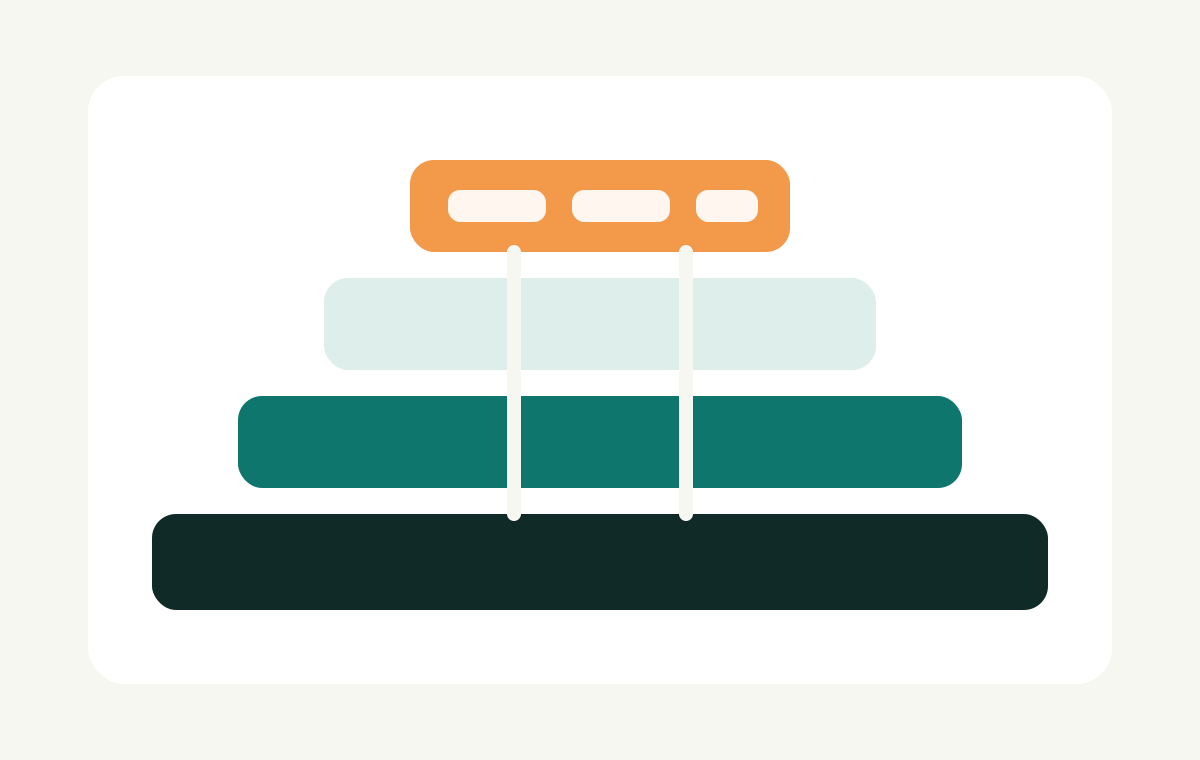
Define the platform in layers
- Ingestion layer for batch, streaming, and external partner data
- Storage layer for raw, refined, and curated assets
- Transformation layer for modeling, testing, and orchestration
- Serving layer for BI, APIs, ML features, and reverse ETL
- Control layer for metadata, lineage, quality, and access policy
Choose patterns, not just products
Teams frequently change vendors as they grow. If the platform design is expressed only as product names, it becomes brittle. If it is expressed as patterns, such as event ingestion, append-only raw retention, semantic modeling, and policy-based access, the architecture stays adaptable.
A good blueprint lowers future decision cost. It does not try to predict every future requirement.
Standardize metadata early
Naming, ownership, classification, and lineage become expensive when deferred. Even a lightweight catalog discipline prevents sprawl and makes self-service analytics safer.
Adopt staged maturity
The first version of a platform should emphasize reliability and clarity over maximal flexibility. More advanced separation, federated governance, and multi-engine serving can come later when usage justifies it.
The best blueprints are calm documents. They explain why each layer exists, what the contracts are, and which tradeoffs the organization is intentionally accepting for now.